
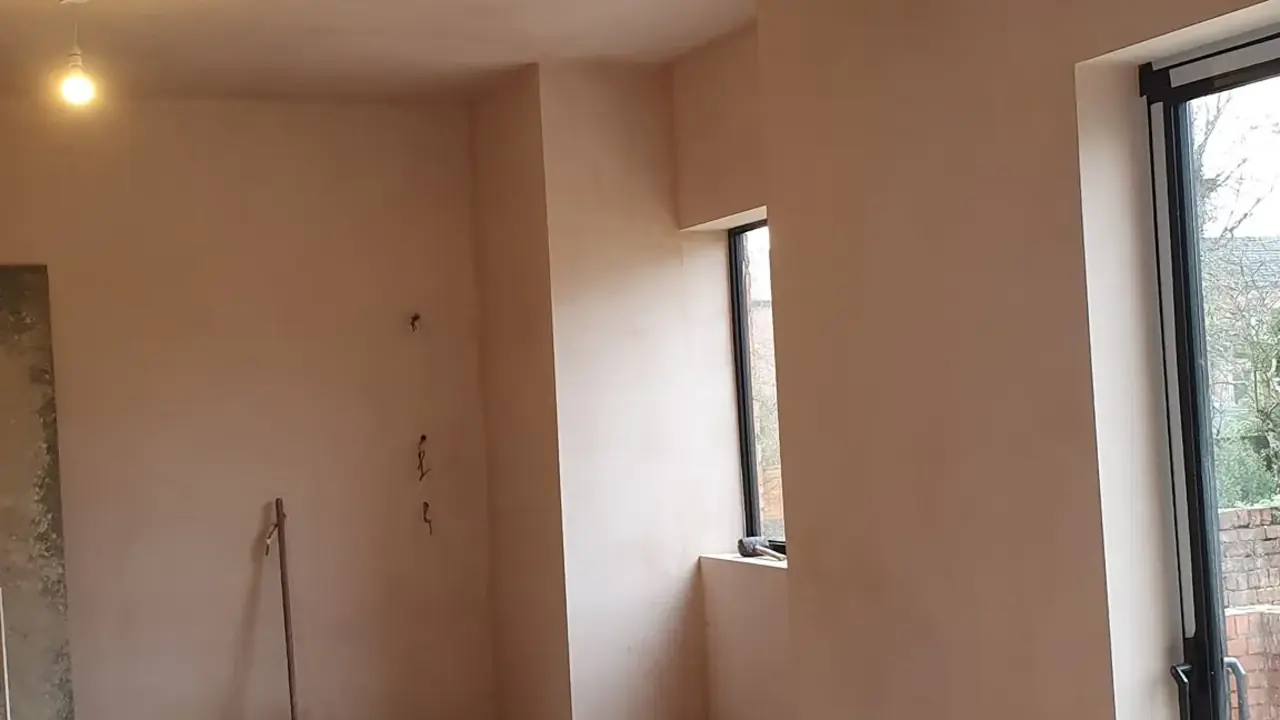
Inside work
Plaster Skimming in Southport
A two-coat finish over a background that is sound, laid and troweled flat so a roller runs over it without finding anything. Where the background is not sound, you get told that before it is priced.
What customers said about this work
Punctual pleasant and a good job completed . Would recommend.
 MyBuilder
Anthony was very punctual and was quick to answer any questions I had. Anthony did a good job plastering our two bathrooms, it was done to a very high standard. He was very tidy and took great effort to keep the rest of the house clean throughout the work. I would highly recommend Anthony for any plastering jobs and would definitely use him again.
MyBuilderAnthony is an excellent plasterer and he has done a great job for me. He skimmed the ceiling and walls of my kitchen in preparation for a new fit. He has been clean and tidy beyond my expectations I would certainly employ him again.
MyBuilderPlaster Skimming
What skimming is, and when a wall needs more than a skim
Skimming is a finish coat, two passes of finish plaster at two or three millimetres, over something that is already flat and already stuck to the wall. On a sound wall it is the cheapest way to get a decorating-ready surface, and it is most of what we do inside.
It is not a fix for a bad background. If the plaster underneath sounds hollow when it is tapped, or it is blown around a chimney breast, or it is bulging under wallpaper, a skim over the top will crack along the same lines within a year. That wall wants floating and setting, or boarding over, and it costs more. We tap the walls at the estimate and tell you which you have got.
Ceilings are the same test. An old lath and plaster ceiling that moves when you push it is not a skimming job, it is an overboarding job.
Get a price for skimming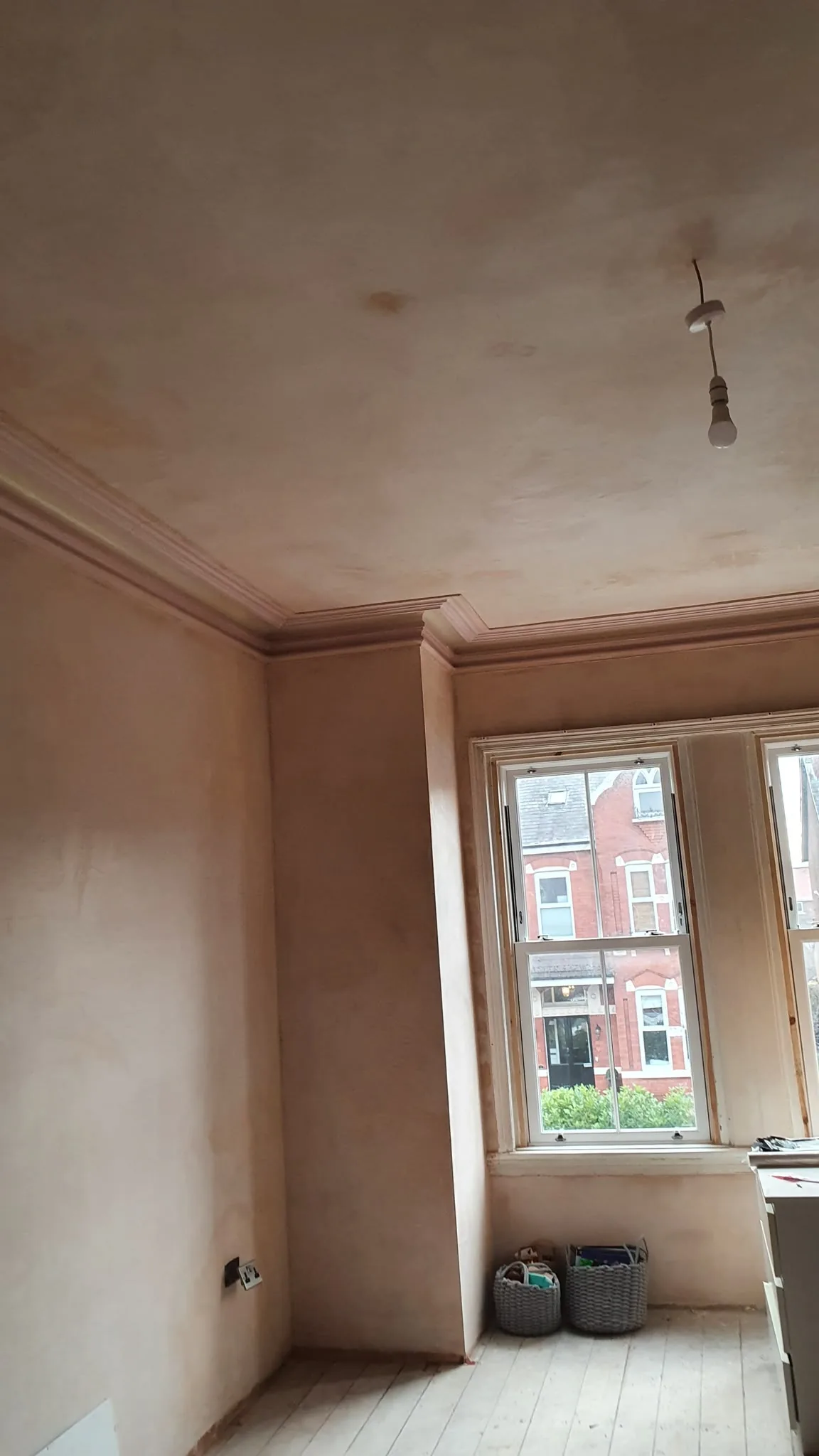
The decision that sets the price
Skim, float and set, or overboard
- Skim only
The background rings solid and is flat. Two coats of finish, taped at any joints, beaded at any external corner, and it is ready for paint. Quickest and cheapest.
- Float and set
The old plaster has come off or is coming off. A backing coat goes on first to build the wall back out and get it flat, then the finish over that. More material, more days, and the only right answer on a wall that has failed.
- Overboard, then skim
Plasterboard fixed over the old surface, scrim-taped, beaded, then skimmed. Standard on lath and plaster ceilings and on walls that are too far out of true to float. It also means nothing has to be hacked off, which on an artex ceiling is the point: see artex removal.
What actually happens
A skim job, in order
- Everything gets sheeted
Floors, radiators, anything staying in the room. Plaster dust travels, so doorways get taped and the room comes back swept, not just emptied.
- The background is prepared
Loose material off, joints scrim-taped, angle and stop beads set where they are needed, and the surface sealed or primed so it pulls at the right rate. Most bad skims are bad because this part was rushed.
- Two coats, wet on wet
First coat laid and flattened, second coat over it, then troweled up as it sets. That timing is the whole job. Too early and it tears, too late and the trowel marks stay in.
- Drying, then decorating
Plaster goes from pink to pale as it dries. As a rough guide that is three to seven days depending on how thick and how warm the room is, and the mist coat wants to go on when it is fully pale, not when it looks nearly there.
What moves the number
What affects the price of skimming
- How much wall or ceiling there is. Priced by the surface, not by the room name.
- Whether it is a skim or a float and set. A failed background doubles the work.
- Ceilings versus walls. Overhead work is slower and messier than a flat wall.
- What has to come off first. Wallpaper, coving, old textured coatings, tile adhesive.
- Access and clearing. A stripped room is quicker than one full of furniture.
- Beads and detailing. Reveals, arches, bulkheads and curved corners all take time.
No square metre price is published here, because one that ignored all of the above would be a guess with a number attached. You get a written estimate after a look at the actual job.
Frequently asked questions
Questions people ask about plaster skimming
If the answer you want is not here, ring and ask.
How long before I can paint fresh plaster?
As a rough guide three to seven days, and go by the colour rather than the calendar. Fresh plaster is pink and dries to a pale even shade; if there are still darker patches it is still wet. The first coat should be a watered-down mist coat, because full-strength emulsion on new plaster sits on the surface and peels later.
Can you skim straight over artex?
Sometimes, if it is a shallow pattern and the ceiling is sound. A heavy swirl or a stippled peak has to be knocked back or overboarded first. And artex from before about 2000 may contain asbestos, which changes the whole approach: nothing gets sanded or scraped. That is set out on the artex removal page.
Can you skim over wallpaper?
No. It might look fine for a fortnight and then blister, because the paste behind it gets wet and lets go, and it takes your new plaster with it. Paper comes off first, which is part of the price.
How much dust is there really?
Less than you fear from the plastering and more than you expect from the preparation. Hacking off, sanding and taking down old coving is the dusty half. Everything gets sheeted, doorways get taped, and the floor is swept and the room cleared at the end of every day rather than at the end of the job.
Do you do ceilings as well as walls?
Yes, and most weeks it is more ceilings than walls: after a leak, after a rewire, or an old lath and plaster ceiling that has had enough and wants overboarding. Ceilings after a leak want the cause fixed and the boards properly dry first, or the stain comes back through the new finish.
Get a price for skimming
Call or send a photo on WhatsApp. Free written estimate after a look at the job.
About plaster skimming in Southport
Most of the skimming round here is one of three houses. A Victorian or Edwardian terrace where the original lime plaster has had a hundred years of movement and half a dozen papering jobs over it. A 1930s semi where the ceilings are lath and plaster and the walls are sound but tired. And a newer house where nothing has failed at all and someone simply wants flat walls to decorate.
Those three want different answers, and the difference is not visible under wallpaper. It is why the estimate involves tapping the walls and pulling a corner of the paper back rather than counting the rooms.
Skimming sits alongside internal plasteringSkimmingArtex Removal, dry lining and decorative plasterwork, and we work across Southport, the Sefton coast, Liverpool and West Lancashire.